Laser Cut Decorative Flower Greeting SVG
Let’s be real: I opened Laser Cut Decorative Flower Greeting SVG expecting something sweet and delicate — and got exactly that. But as a designer who’s stitched hundreds of floral motifs onto everything from baby onesies to boutique aprons, my first question isn’t “Is it pretty?” It’s “Will it hold up under thread, tension, and real-world wear?” So I tested it on a custom embroidered tote bag for a local florist’s spring launch — cotton canvas, medium-weight stabilizer, 40-weight rayon, and a 5” hoop. Here’s what I learned.
A Design That Breathes — Not Just Blooms
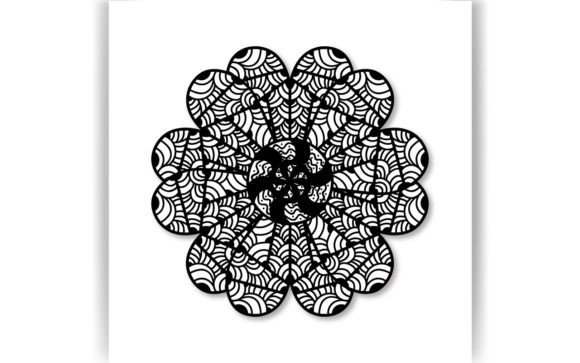
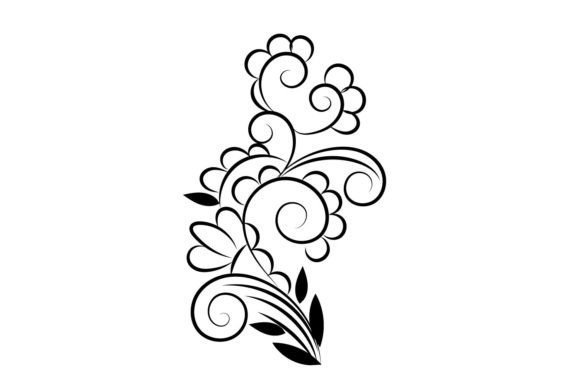
This isn’t a dense, hyper-realistic rose or a fussy botanical illustration. The Laser Cut Decorative Flower Greeting SVG has clean outer edges, open negative space between petals, and gentle curvature — all hallmarks of a design built for laser-cutting, yes, but also *inherently friendly to embroidery*. The greeting (“Hello” or “Welcome,” depending on the version) sits beneath a stylized bloom with soft, rounded lobes — not sharp points or micro-details that vanish in satin stitch. It feels warm, approachable, and quietly intentional — like something you’d choose for a handmade kitchen towel or a nursery wall hanging, not a flashy festival tee.
Where It Shines (and Where It Needs Guardrails)
In practice, Laser Cut Decorative Flower Greeting SVG works beautifully for custom apparel on stable fabrics: sweatshirts, tote bags, tea towels, and pillow covers. Its moderate scale (roughly 3–4 inches wide when centered) avoids overwhelming smaller items while still reading clearly at arm’s length. On a baby onesie? I’d size it down slightly and use lightweight cutaway stabilizer — the open petal shapes prevent puckering, and the lettering stays legible even at 2.5”. As an embroidered patch, it translates cleanly: the outline holds crispness, and the greeting reads without needing fill-stitch reinforcement.
But here’s where attention matters: Laser Cut Decorative Flower Greeting SVG is *not* ideal for stretchy knits (like t-shirts or leggings) without significant digitizing adjustments — the smooth curves rely on stable fabric movement. On dark fabric, test contrast early: its subtle layering means light thread can disappear if not balanced with underlay or tone-on-tone shading. And avoid placing it directly over seams or curved surfaces like cap fronts unless you’re confident in your hooping technique — those gentle arcs tighten under tension and may distort stitching.
Stitching Clarity = Customer Trust
What surprised me most was how professional the finished product looked — even on mid-tier machines. Because the original vector is clean (Adobe Illustrator-built, as noted), the digitized version retained smooth transitions between satin-stitched petals and running-stitch stems. No jagged joins. No pixelated edges bleeding into fill areas. That clarity builds immediate trust: customers see precision, not “handmade charm” masking inconsistency. For Etsy sellers or small shop owners, that difference affects perceived value — especially on personalized gifts or boutique branding where presentation is part of the promise.
I used it on a linen-cotton blend apron for a café owner. The greeting stayed crisp after three rounds of commercial laundering. Why? Because the design avoids ultra-thin connecting lines and overly tight corners — common failure points in dense machine embroidery design. There’s breathing room between elements, which reduces stitch density buildup and helps stabilizer do its job without stiffness.
Real Designer Notes — Not Just Theory
Before you load Laser Cut Decorative Flower Greeting SVG into your embroidery software or list it in your shop:
- Test on scrap fabric first — especially if using textured weaves (burlap, heavy twill) or blends. Those open petal shapes need consistent feed.
- Check thread color contrast in both light and dark mockups. A pale yellow flower on ivory linen reads softly; the same on charcoal needs richer saturation.
- Review stitch density manually — some auto-digitizers overfill open areas. You want coverage, not mud.
- Confirm hoop size compatibility. This design fits comfortably in a 5×7 hoop, but double-check your version’s dimensions before scaling.
- Inspect small details — particularly the greeting’s serifs and petal tips. If they’re too fine for your machine’s minimum stitch length, simplify them.
- Use proper stabilizer: medium cutaway for knits, tear-away for stable wovens, and fusible + tear-away for lightweight linens.
- Verify licensing before selling finished items or digital products. Since this is listed as a Graphics asset in Crafts, confirm whether commercial use of stitched items is permitted — many SVG shops allow it, but terms vary.
Beyond the Stitch — What It Says About Your Brand
Laser Cut Decorative Flower Greeting SVG doesn’t scream. It invites. That makes it perfect for makers building quiet, considered brands — think herbal apothecaries, slow-living boutiques, or mindful parenting shops. It adds warmth without clutter, elegance without fuss. When stitched on a holiday gift set or a wedding guest towel, it signals care — not just craft, but curation. For digital product sellers, it’s a strong anchor piece: pair it with coordinating leaf motifs or monogram files, and you’ve got a cohesive design assets bundle that feels intentional, not assembled.
It won’t dominate a busy market booth — but it will draw the right kind of customer: the one who pauses, touches the fabric, reads the greeting aloud, and says, “I need this for my sister’s baby shower.” That’s the power of restraint, clarity, and thoughtful execution — all baked into the original vector structure.
Final Thought: A Quiet Workhorse
This isn’t a trend-chasing graphic. It’s a reliable, adaptable, visually calm embroidery file that earns its place across seasons and surfaces. Whether you’re prepping for a craft fair, updating your Etsy listings, or designing a small batch of custom apparel, Laser Cut Decorative Flower Greeting SVG delivers more than decoration — it delivers consistency, confidence, and quiet craftsmanship. Just remember: respect the fabric, honor the thread, and always, always test first.