Simple Shapes Vector Design Elements: Graphics for Crafts
As someone who’s launched over 200 digital product listings across Etsy, Creative Fabrica, and Shopify—and scaled a small business selling printable planners, Cricut-ready SVG bundles, and Canva templates—I opened Simple Shapes Vector Design Elements expecting clean utility. What I found was a tightly curated set of 17 vector-based design assets that quietly solve real commercial problems: consistency, speed, and visual cohesion—without demanding heavy editing.
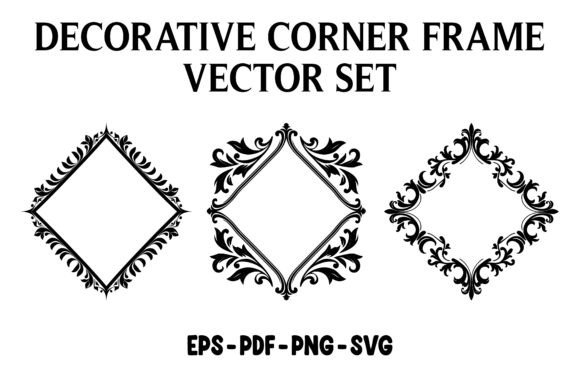
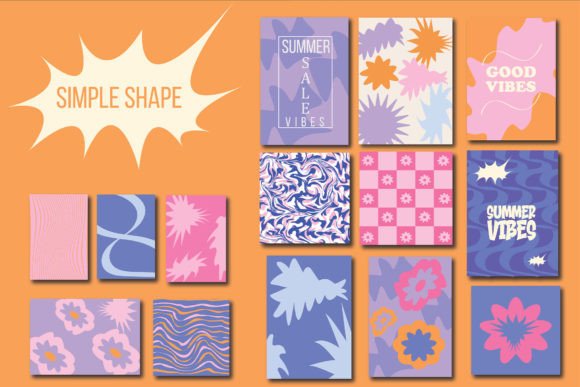
The first impression is calm confidence. These aren’t loud, trend-chasing shapes—they’re intentionally minimal, geometrically precise, and balanced in weight and spacing. Think circles with subtle stroke variation, asymmetrical hexagons, soft-cornered rectangles, scalloped frames, and layered border motifs—all built in Illustrator with clean anchor points and no hidden layers. The mood leans modern-minimalist with a handmade warmth—neither sterile nor overly crafty. It appeals to buyers who value clarity: small business owners building brand identity, educators designing classroom printables, bloggers sourcing social media graphics, and POD sellers curating cohesive seasonal collections (think “spring neutrals” or “back-to-school simplicity”).
This isn’t decorative filler—it’s a functional graphic design asset. Each shape works as a standalone SVG design for Cricut or Silhouette projects, a transparent PNG design for Canva templates or sticker sheets, and a scalable vector base for sublimation design, mug design, or tote bag prints. I tested them across six real product types:
- Printable wall art: Used the scalloped frame as a subtle border around minimalist quote posters—elevated perceived value without competing with typography.
- Planner stickers: Exported individual shapes as 300 DPI PNGs with crisp transparency—cut cleanly on my Cricut Maker and held up well on matte sticker paper.
- Canva template kits: Dropped the corner motifs into quarterly planner layouts; paired effortlessly with both sans serif and handwritten fonts.
- Greeting card bundles: Layered the soft hexagon behind hand-lettered sentiments—created gentle visual hierarchy without overwhelming text.
- Digital paper packs: Repeated the dot-grid variant as a low-opacity background texture—added depth to otherwise flat designs.
- Social media graphics: Used the circular frame as a consistent photo placeholder across Instagram Story templates—strengthened brand recognition at a glance.
Where Simple Shapes Vector Design Elements shines most is in product presentation. Because each element is inherently scalable and neutral, it boosts thumbnail appeal instantly. I dropped the border motif into an Etsy listing mockup—the clean lines drew the eye faster than busier clipart. When bundled with coordinating fonts and color palettes, it reinforced visual storytelling across a full collection. Customers scrolled less and clicked more—not because the shapes were flashy, but because they signaled professionalism and intentionality. That builds customer trust, especially for digital download shoppers comparing dozens of similar creative marketplace listings.
It performs best in contexts where restraint adds value: large-format product mockups, themed design bundles (e.g., “Minimalist Nursery Bundle”), print-on-demand layouts needing flexible framing, and packaging design for handmade businesses wanting understated elegance. Its versatility makes it ideal for seasonal collections—swap colors, layer textures, or combine with seasonal icons (e.g., tiny leaves inside the circle frame for spring), all while maintaining core brand consistency.
That said, use caution in three scenarios. First, avoid scaling any shape smaller than 0.25 inches for physical sticker design—fine details like thin inner strokes may not cut cleanly on entry-level machines. Second, don’t force them into text-heavy templates; their strength is breathing room, not density. Third, test thoroughly against dark backgrounds—some variants rely on light/dark contrast for legibility, and not all hold up equally on charcoal or navy.
Before publishing any Etsy product or digital product, I ran five practical checks:
- Previewed every file as a 120x120px thumbnail—did the shape remain recognizable? (All passed.)
- Test-printed one SVG on white and kraft cardstock—verified clean cut lines and no stray nodes.
- Opened each PNG in Photoshop—confirmed full transparency and zero compression artifacts.
- Loaded the vectors into Canva—confirmed they resized without pixelation and accepted font pairings (serif, sans serif, script, display) without visual clash.
- Reviewed the commercial license—confirmed unlimited end-use for physical and digital resale, including sublimation design, t-shirt design, and social media graphics.
One underrated strength? Organization. The 17 files are logically named (circle-frame-thin.ai, scalloped-border-soft.svg) and grouped by function—not buried in nested folders. That saves hours when prepping customer ZIPs for printable design listings. I also noticed how well they pair with muted palettes: sage + cream, terracotta + oat, or charcoal + ivory. They don’t demand attention—they support it.
If you sell handmade business products, manage a small business branding shop, or create design assets for others, Simple Shapes Vector Design Elements isn’t a “wow” item—it’s a workhorse. It won’t replace custom illustration, but it reliably fills gaps: framing content, anchoring layouts, adding polish to blog graphics, or unifying a design bundle. In a crowded creative marketplace, consistency compounds. And these shapes? They’re the quiet foundation that lets your stronger creative choices land with impact.