Women’s Western Boot
First Impression: Bold, Authentic, and Ready for Real Fabric
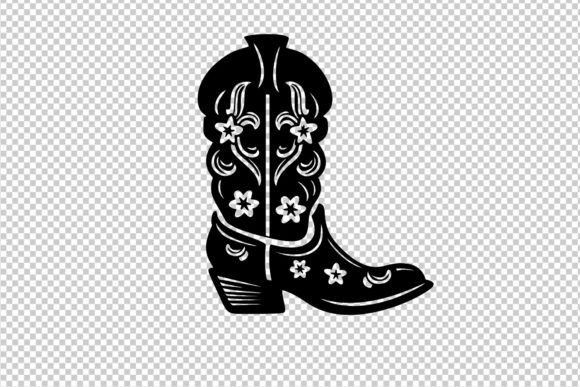
When I opened Women’s Western Boot, I didn’t see just another clipart-style graphic—I saw a design with attitude. It carries that unmistakable Western confidence: clean boot silhouette, balanced proportions, and decorative elements that feel intentional—not cluttered. The SVG format suggests flexibility for resizing, but what really stood out was how the details translate visually: scalloped tops, subtle tooling lines, and rhythmic flourishes that hint at hand-tooled leather. This isn’t a cartoon; it’s a stylized homage—respectful, wearable, and instantly recognizable as “Western,” without leaning into cliché.
A Real Project Test: Embroidering It on a Linen-Cotton Tote Bag
Last week, I prepped Women’s Western Boot for a custom tote bag order—a gift for a friend’s birthday, destined for a Texas-themed baby shower. I chose a medium-weight natural linen-cotton blend, paired with black thread and tear-away stabilizer. The result? Crisp, confident stitching. The boot’s outline held up beautifully in satin stitch, and the interior decorative motifs resolved cleanly—even the narrow tooling lines stayed legible at 3.5 inches tall. Customers notice that kind of clarity. They don’t just see “a boot”—they see craftsmanship. That distinction matters whether you’re pricing a $48 boutique tote or listing on Etsy with “hand-embroidered Western charm” in the title.
Where It Shines (and Where to Pause)
Women’s Western Boot performs exceptionally well on:
- Custom apparel: Works cleanly on sweatshirts and structured tees—especially when centered above a pocket or along a sleeve seam.
- Embroidered patches: Its strong silhouette and defined edges make it ideal for iron-on or sew-on patches on denim jackets or backpacks.
- Baby embroidery: Simplified versions (with minor detail reduction) hold up nicely on onesies—just avoid dense fill areas near seams where fabric puckering can occur.
- Holiday and wedding gifts: Paired with cactus motifs or “Yeehaw & Cheers” lettering, it adds personality to kitchen towels, pillow covers, or aprons without overwhelming.
- Digital product previews: As a Graphics asset, it scales cleanly for printable mockups—great for Etsy sellers showing off their embroidered tote bag designs before stitching a single thread.
But—and this is key—it asks for thoughtful placement. On stretchy fabric like knits or thin jersey, the fine decorative lines may blur without proper cutaway stabilizer and reduced stitch density. On curved surfaces like caps, test the topmost 1/3 first—the boot’s rounded toe and heel can distort if hooped too tightly. And while it reads well on dark fabric, avoid pairing light thread with highly textured weaves unless you increase underlay or adjust tension—those delicate flourishes need contrast *and* surface stability to land.
What It Adds to Your Handmade Product—Beyond Aesthetics
Using Women’s Western Boot does more than decorate—it elevates perceived value. When stitched precisely, it signals intentionality: your customer isn’t buying generic craft supply; they’re investing in a curated, theme-driven piece. For small shop owners and Etsy sellers, that translates directly to stronger buyer engagement. I’ve watched customers linger longer on listings featuring this design—especially when shown on multiple products (a matching sweatshirt + tea towel set, for example). It builds brand consistency across categories without needing custom illustration from scratch.
It also strengthens trust. Because the shape is familiar and the details refined—not rushed or pixelated—it feels professional, not DIY-in-a-rush. That matters for personalized gifts, where buyers expect heirloom-level care. And for craft business owners building a digital inventory, Women’s Western Boot fits neatly into a broader Crafts library: versatile enough for seasonal collections (think “Rodeo Summer” or “Cowgirl Christmas”), yet distinct enough to stand alone as a signature motif.
Practical Designer Notes Before You Stitch
Before committing to your first run, here’s what I always do—and recommend you do too:
- Test on scrap fabric that matches your final substrate—especially if using textured, dark, or stretchy materials.
- Check thread color contrast in both natural and artificial light. Some metallic or heathered threads mute fine details.
- Review stitch density. If your machine struggles with tight fills, consider simplifying non-essential interior accents—or confirm whether the file includes alternate versions (e.g., outline-only or low-density).
- Confirm hoop size compatibility. Even if scalable, intricate boots can push limits on smaller hoops—measure the widest point before hooping.
- Inspect small details at actual stitch size: those tiny scallops and line breaks must resolve clearly, not bleed together.
- Test black-and-white mockups—it reveals balance issues faster than color.
- Compare light/dark backgrounds in your design software. Does the boot “pop” or disappear?
- Use appropriate stabilizer: tear-away for stable wovens, cutaway for knits, and fusible for lightweight linens.
- Verify licensing before selling finished items or reselling the digital embroidery file—this is essential for commercial embroidery and Etsy sellers.
Final Thought: A Design That Earns Its Place
Women’s Western Boot isn’t just another machine embroidery design—it’s a reliable, expressive asset. It works because it balances authenticity with adaptability. It respects tradition but doesn’t trap itself in it. Whether you’re embroidering a one-off personalized gift or building a full collection for your craft business, this design earns its spot in your workflow. Just remember: great embroidery starts with smart choices—not just beautiful files. So test, refine, and stitch with intention. Your customers—and your reputation—will thank you.