90s Squiggle Scribble Seamless Pattern
First Impressions: A Hand-Drawn Pulse, Not a Pixel-Perfect Pose
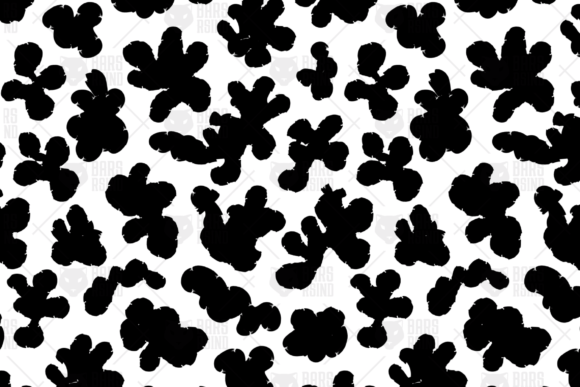
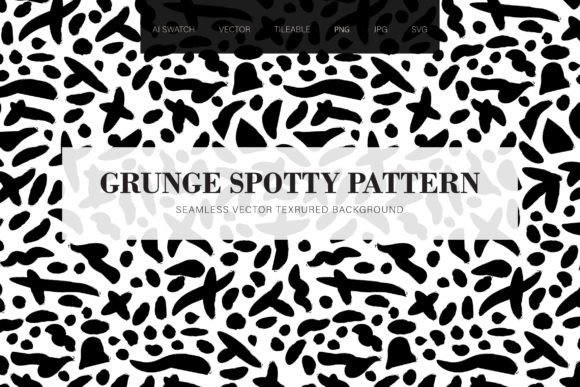
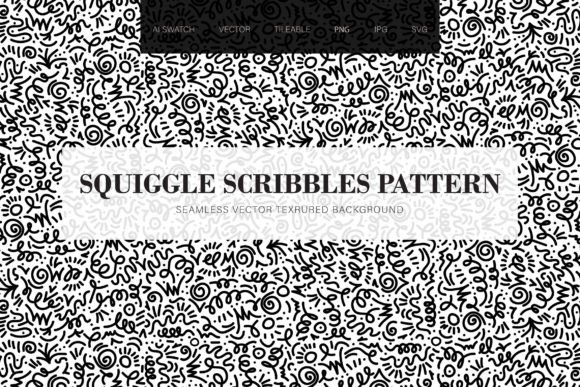
When I opened 90s Squiggle Scribble Seamless Pattern, I didn’t see a “trendy” design—I saw movement. It’s got that unmistakable looseness of ink on paper: wobbly lines, uneven loops, and intentional imperfections that breathe like real handwriting. This isn’t minimalism as austerity—it’s minimalism with personality. The hand-drawn abstract symbols feel playful but not childish, nostalgic but not kitschy. As an embroidery designer, my first thought wasn’t “How do I digitize this?” but “Where would this *live*—and how would it *hold up* under thread?”
A Real Project Test: Embroidering a Linen Tote Bag for a Local Boutique
Last week, I prepped a custom order: six linen tote bags for a small shop launching a summer capsule collection. They wanted something “quietly cool”—not loud logos, but subtle texture that whispered 90s indie without screaming it. I chose 90s Squiggle Scribble Seamless Pattern as a background fill behind a small embroidered monogram. Why? Because its organic rhythm complements natural fabric grain, and its low visual weight keeps the focus on craftsmanship—not clutter.
Where It Shines in Real Embroidery Work
- Custom apparel: Works beautifully on relaxed-fit sweatshirts and oversized tees—especially when used as a tonal fill behind a central motif or along a sleeve cuff.
- Tote bag design & pillow covers: Its seamless repeat means no awkward seams across wide panels; stitch density stays even across large fills without overwhelming the fabric.
- Baby embroidery & nursery decor: Soft abstraction reads as soothing—not busy—on organic cotton onesies or muslin wall hangings. No sharp angles or fussy details to snag tiny fingers.
- Holiday embroidery & personalized gifts: Paired with a single hand-stitched word (“Joy”, “Home”, “Now”) or a tiny embroidered star, it adds warmth without seasonal cliché.
- Embroidered patch & apron accents: Scales well down to 3–4 inches wide. The squiggles retain character even at smaller sizes—no vanishing lines or muddy corners.
Where to Proceed With Care
This pattern is expressive, not engineered—and that’s its strength *and* its limitation. Here’s where attention matters:
- Small hoop sizes (under 4”): Avoid using the full repeat; crop intentionally to highlight one or two strong squiggle clusters instead of compressing the rhythm.
- Textured fabrics (terry cloth, bouclé, heavy denim): The design’s fine-line energy can get visually lost. Try simplifying the repeat to every other loop—or use it as a light satin-stitch outline rather than dense fill.
- Thin or stretchy fabric (rayon challis, lightweight knits): Requires medium-weight cutaway stabilizer underneath. Running stitch elements may ripple if tension isn’t dialed in.
- Dark fabric backgrounds: Light thread colors (ecru, pale grey, mint) read clearly—but avoid white on black unless you’re confident in your machine’s top tension. Test first.
- Curved surfaces (caps, curved pillow fronts): The seamless nature helps, but avoid placing tight clusters near seams or crowns where distortion pulls lines out of proportion.
What It Adds to Your Finished Product—Beyond Looks
Using 90s Squiggle Scribble Seamless Pattern doesn’t just add decoration—it adds intention. Customers notice the difference between “printed-on” busyness and thoughtful, handmade texture. On an Etsy listing, it elevates perceived value: buyers see care in curation, not just execution. For a craft fair booth, it quietly reinforces brand voice—modern but warm, nostalgic but fresh. And for commercial embroidery clients? It signals design fluency: you’re not just stitching logos—you’re editing visual language.
Practical Notes Every Embroidery Designer Should Run Through
- Test the embroidery file on scrap fabric matching your final project’s weight and weave—not just on stabilizer alone.
- Check thread color contrast in both natural and artificial light. What reads softly in daylight may vanish under store lighting.
- Review stitch density: too much fill in tight loops risks puckering on delicate fabrics; too little loses the hand-drawn charm.
- Confirm hoop size compatibility before digitizing—some seamless repeats assume a minimum 5” x 7” field.
- Inspect small details at actual stitch scale. Zoom in on your embroidery software: do any squiggles collapse into unreadable blobs?
- Run black-and-white mockups. Does the rhythm hold up without color crutches?
- Compare light and dark fabric backgrounds side by side—especially if selling digital embroidery files or printable mockups.
- Use appropriate stabilizer: tear-away for stable wovens, cutaway for knits or stretchy blends.
- Verify licensing terms before selling finished products or bundling 90s Squiggle Scribble Seamless Pattern as part of a craft business toolkit.
Final Thought: Not Just a Pattern—A Quiet Confidence Builder
I’ve used dozens of “seamless” patterns over the years—many technically flawless, few with this kind of quiet confidence. 90s Squiggle Scribble Seamless Pattern doesn’t try to be everything. It’s a focused tool: for designers who know when simplicity speaks louder than saturation, for Etsy sellers who build loyalty through consistency, and for makers who understand that the best handmade product isn’t the flashiest—it’s the one that feels like it was made *for* someone. If your next project needs rhythm without rigidity, texture without tension, or nostalgia without noise—this is worth your time, your stabilizer, and your stitch count.